Your Body Has Been Sending You Signals: 7 Ways It's Asking for an Aromatherapy Reset

Your Body Has Been Sending You Signals: 7 Ways It's Asking for an Aromatherapy Reset
There is a particular kind of tiredness that sleep does not fix. It settles into the shoulders, dulls the eyes, and makes even simple decisions feel heavier than they should. Most Americans push through it — scheduling another meeting, ordering another coffee, telling themselves things will ease up soon.
But the body keeps a more honest account. And when it has been carrying too much for too long, it communicates in ways that are worth learning to recognize.
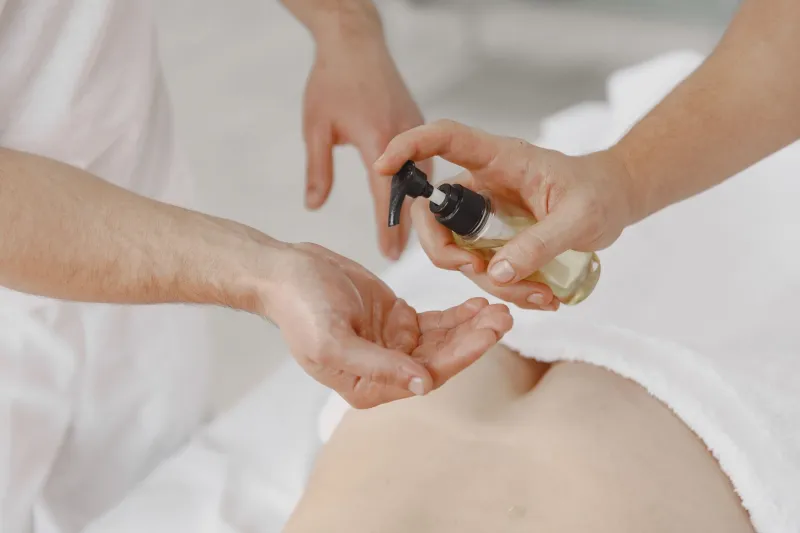
At Diana Tokyo Aroma Massage, we work with guests who arrive from across the United States carrying varying degrees of this accumulated strain. Over time, we have come to recognize the patterns — the physical and emotional signals that consistently appear in people whose systems are genuinely depleted. What follows is a guide to seven of the most common signs, along with an explanation of how targeted aromatherapy and skilled therapeutic massage address each one at its root.
 Photo: Diana Tokyo Aroma Massage, via cdn.britannica.com
1. You Wake Up Tired, No Matter How Many Hours You Sleep
This is perhaps the most disorienting signal of all. You went to bed at a reasonable hour. You slept the full eight hours. And yet you woke up feeling as though you had barely rested.
This pattern frequently reflects a nervous system that cannot fully downregulate — one that remains in a low-grade state of alertness even during sleep. The muscles stay subtly contracted. The breath stays shallow. The brain never fully releases its vigilance.
Essential oils with pronounced sedative and nervous-system-calming properties — particularly Roman chamomile, lavender, and the Japanese botanical kuromoji — are applied during a full-body aromatherapy massage to encourage genuine parasympathetic activation. When the body is touched with therapeutic intention while simultaneously receiving these botanical signals through the olfactory system, the combined effect can shift even a chronically activated nervous system toward the deep rest it has been denied.
2. Tension Headaches Have Become a Regular Occurrence
If you find yourself reaching for ibuprofen two or three times a week, you are managing a symptom rather than addressing its source. Tension headaches that recur with regularity typically originate in the muscles of the neck, upper back, and shoulders — areas where modern Americans hold an extraordinary amount of chronic stress.
Peppermint and eucalyptus oils, applied with focused pressure work along the cervical spine and occipital ridge, produce measurable relief by increasing local circulation and releasing the muscular adhesions that compress nerves and restrict blood flow. In Tokyo wellness practice, this targeted approach is frequently combined with broader relaxation techniques to ensure that the relief achieved during the session is not immediately undone by returning to the same postural habits that caused the problem.
3. You Feel Emotionally Flat or Persistently Low
Not depressed, exactly — but not quite yourself either. Colors seem slightly less vivid. Things that used to generate genuine enthusiasm now produce only mild interest. This emotional flatness is one of the subtler signs of depletion, and it is one that many people dismiss or rationalize rather than address.
Yuzu, the Japanese citrus botanical that has been central to wellness rituals in this country for generations, is particularly effective in addressing this state. Its aroma activates limbic system pathways associated with emotional warmth and uplift without the slightly anxious edge that some Western citrus oils can produce. When incorporated into a full-body massage, the effect is less a sudden brightening than a gradual and genuine return to baseline emotional tone.
4. Your Shoulders Feel Like They Are Permanently Attached to Your Ears
This is not metaphorical. Chronic stress causes the trapezius and levator scapulae muscles to contract and hold — and in many stressed Americans, this contraction becomes so habitual that it no longer registers as tension. It simply feels like the way things are.
Deep tissue work combined with warming oils — ginger, black pepper, and hinoki cypress are particularly effective — increases circulation to these chronically contracted areas, raises local tissue temperature, and encourages the muscle fibers to release their grip. The warmth of hinoki in particular carries a grounding, almost meditative quality that supports the physical release with a corresponding emotional one. Guests frequently report a sensation of the shoulders literally dropping during treatment — not a dramatic event, but a quiet and profound relief.
5. You Have Been Traveling and Your Body Feels Completely Disoriented
Jet lag is well understood, but travel fatigue is a broader and more complex condition. Extended flights compress the spine, restrict circulation in the legs, dehydrate the tissues, and disrupt the circadian rhythms that govern nearly every biological process. Arriving in Tokyo after a fourteen-hour flight from the West Coast, many of our guests describe feeling as though they are inhabiting someone else's body.
 Photo: West Coast, via www.toplitz-productions.com
A carefully sequenced aromatherapy massage in the first day or two of arrival serves as a powerful recalibration tool. Circulatory-stimulating oils such as rosemary and juniper berry, combined with lymphatic drainage techniques, help move the accumulated fluid and metabolic waste that long-haul travel leaves behind. Grounding oils like sandalwood and cedarwood support the body's effort to reestablish a sense of physical presence and spatial orientation. The result is not merely relaxation — it is a genuine shortening of the recovery arc.
6. You Cannot Seem to Quiet Your Mind, Even When You Want To
You sit down to read and find yourself rereading the same paragraph. You lie in bed and watch your thoughts race through tomorrow's schedule, last week's conversation, and a dozen unresolved concerns. The capacity to simply be present — without narrating, planning, or reviewing — has become elusive.
This state of mental restlessness responds remarkably well to the combined sensory experience of professional aromatherapy. The olfactory pathway is the most direct of all sensory routes to the brain's emotional and regulatory centers, bypassing the cortical processing that keeps the analytical mind engaged. Frankincense, vetiver, and the Japanese forest-derived oil hinoki cypress have all demonstrated measurable effects on respiratory rate, heart rate variability, and subjective states of mental calm. When these oils are received during a full-body massage — when the body is also being asked to release its physical holding — the mind often follows without resistance.
7. You Cannot Remember the Last Time You Truly Felt Restored
This final sign is perhaps the most telling, and the most commonly overlooked. When asked to recall the last occasion on which they felt genuinely rested — not merely less tired, but actively restored — many of our American guests find themselves drawing a blank. It has been months. For some, it has been years.
This is the signal that matters most, because it points not to a specific symptom but to a cumulative deficit. The body has been running on reserves for so long that the concept of restoration has become abstract.
Professional aromatherapy massage is not a luxury in this context. It is a legitimate therapeutic intervention — one with documented physiological effects on cortisol levels, immune function, sleep quality, and emotional regulation. The wellness philosophy practiced in Tokyo's finest treatment studios has always understood this. The practitioner's role is not to provide a pleasant hour, but to help the body remember what balance feels like.
Listening Is the First Step
The body does not issue these signals arbitrarily. Each one represents a genuine need — a request, expressed through the only language the body possesses, for the kind of care that restores rather than merely sustains.
At Diana Tokyo Aroma Massage, we invite you to take these signals seriously. Whether you are planning a wellness-focused visit to Tokyo or simply deepening your understanding of what therapeutic aromatherapy can offer, the starting point is the same: listening to what your body has already been telling you.