Frequency Over Folly: Why Ninety Minutes on a Tuesday Outperforms Your Sunday Self-Care Marathon
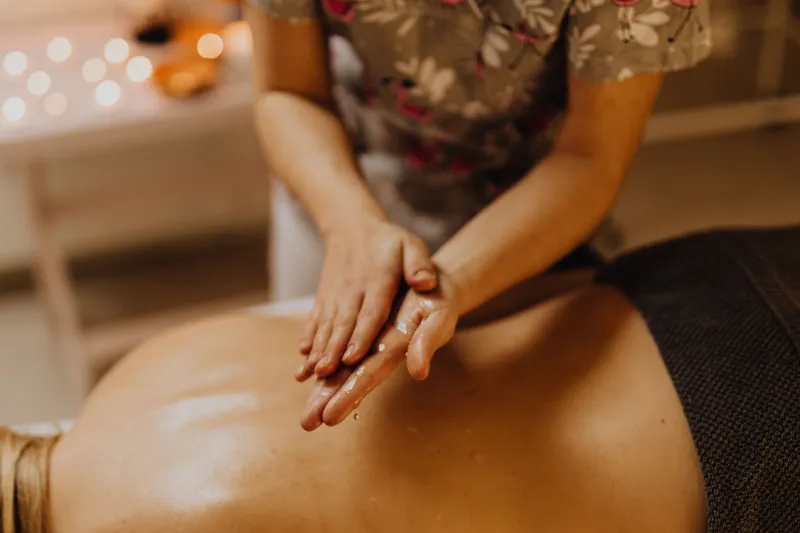
There is a particular kind of exhaustion familiar to anyone who works hard in an American city: the exhaustion of the weekend that didn't work. You guarded Sunday like a fortress. You lit the candle, rolled out the yoga mat, ran the bath. And by Monday at 10 a.m., the benefits had evaporated as though they had never existed.
The problem is not discipline. The problem is the model itself — the belief that restoration is something to be banked in bulk on the margins of life, rather than something to be practiced steadily within it. Tokyo, and Shinjuku in particular, offers a convincing counterargument.
The Flaw in the Self-Care Sunday Model
The American wellness ritual treats the nervous system like a savings account: make one large deposit, then withdraw all week without penalty. Physiology does not cooperate. Chronic muscle tension, elevated cortisol, and the shallow breathing patterns of a high-stress workweek rebuild themselves within a day or two of a single intervention.
A weekend session is not worthless — but it is a fire extinguisher, not a fire prevention system. What genuinely changes the body's baseline is rhythm: regular, modest doses of downshifting, spaced close enough together that the nervous system never fully re-armors itself.
What Tokyo Already Understands
In Japan, care of the body is not quarantined into leisure time. Short massage sessions, aromatic oil treatments, and deliberate pauses are woven into ordinary days — after work, between obligations, during the long commute home. The assumption is that restoration belongs inside a working life, not at the edge of it.
Shinjuku embodies this logic. Beneath the neon intensity of the district, a quiet infrastructure exists: aroma massage studios where an office worker can step off the Yamanote line, surrender ninety minutes to warm oils and unhurried hands, and return to the evening with a fundamentally different body. It is treated not as indulgence but as maintenance — as unremarkable and as necessary as lunch.
The Ninety-Minute Arithmetic
Consider what ninety minutes actually buys. A full-body aroma session with a skilled practitioner addresses the shoulder and neck load that desk work accumulates, slows the breath through the direct action of scent on the limbic system, and — critically — happens while the stress is current, not a week stale.
Compare this to the weekend alternative: four or five hours of self-administered wellness, much of it spent managing logistics, and benefits that decay before the next workday ends. Frequency beats duration. This is not a slogan; it is how adaptation works. Muscles, like minds, respond to repetition.
A Practical Guide for the Business Traveler
For Americans visiting Tokyo on business, the Shinjuku model is genuinely easy to adopt:
- Book the gap, not the evening. The window between a morning meeting and a dinner engagement is ideal. A 1:00 p.m. session leaves you composed rather than sedated for the evening's obligations.
- Choose aroma oil massage for mental fog, shiatsu-style pressure for deep shoulder tension. Both fit comfortably within a ninety-minute block, including arrival and a short recovery tea.
- Communicate your schedule. Practitioners in Tokyo are accustomed to clients on tight timetables and will pace the session accordingly.
- Skip the caffeine beforehand. A session taken between meetings works best when the body is not braced against a recent espresso.
- Shower facilities and freshening up afterward are standard — you can walk from the treatment table into a client dinner without a trace of the afternoon.
A Different Relationship With Rest
The deeper shift is attitudinal. The Self-Care Sunday model frames rest as a reward, something earned by a week of depletion. The Tokyo model frames it as maintenance — unglamorous, recurring, effective.
If your Sundays have been failing you, the answer may not be a better Sunday. It may be a Tuesday, ninety minutes long, with warm oil, quiet air, and nowhere else to be. Shinjuku is a fine place to learn that lesson. It travels home with you.


