One Bottle of Hinoki, and My Evenings Belong to Tokyo Again

Photo by Photo by Eugene Uhanov on Unsplash on Unsplash
It happened on an ordinary Thursday in November, four months after I had returned from Tokyo. I was unpacking a box of things I had shipped home when I found the small bottle of hinoki oil I had bought on a whim from a shop near the massage studio in Shinjuku. I opened it, and my shoulders dropped before I had consciously registered the scent.
Not relaxed. Dropped. As though a hand I remembered distinctly had pressed down along my spine and told my body, again, that it was allowed to stop.
The Table I Can Still Feel
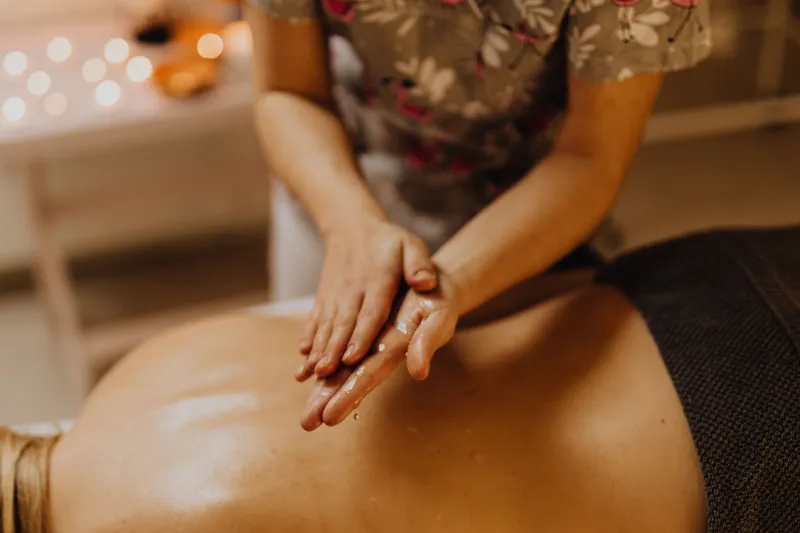
The session itself had been unremarkable in the way the best ones are. Ninety minutes, warm oil, a fragrance of cedar and rain that the practitioner told me came from Japanese cypress — hinoki, the wood of temples and baths. I remember thinking, at the time, that it was lovely but transient, a pleasant hour that would dissolve back into my life like a stone into a river.
I was wrong about the dissolving. What I did not account for was the wiring.
Why Scent Refuses to Be Forgotten
The science here is unusually elegant. Of all the senses, smell is the only one whose signals route directly into the amygdala and hippocampus — the brain's emotional and memory centers — without first passing through the thalamus, the usual relay station. Smell does not file a report about an experience; it becomes part of the memory itself.
This is why a single scent can retrieve an entire afternoon. During my massage, the hinoki aroma was present precisely when my nervous system was learning, stroke by stroke, what safety and stillness felt like. The scent and the state were encoded together. Months later, one inhale reactivates both.
Researchers call this odor-evoked autobiographical memory, and its signature is emotional vividness — scent-cued memories feel more immediate and feeling-saturated than memories recalled through words or images. My Thursday-night shoulders can attest to that.
Rebuilding the Ritual at Home
I will not pretend my apartment replicates a Tokyo treatment room. But the mechanism that carried me back — paired scent and calm — can be deliberately cultivated. Here is what I do now, most evenings:
The oil. Hinoki essential oil, three drops in a diffuser, begun ten minutes before anything else. Yuzu works beautifully as an alternative, brighter and more citrus-forward.
The light. Everything overhead goes off. One lamp, warm-toned, placed low. Tokyo's spas understand that darkness is an instruction to the nervous system, not a mood choice.
The sequence. The ritual matters more than the props. Same order, same time: diffuser, lamp, phone face-down in another room, then ten slow minutes of simply sitting before anything else. Repetition is what teaches the body that this scent means surrender.
The phone ban. Non-negotiable. The association forms around whatever else is present. If the hinoki evenings are spent scrolling, the scent will come to mean scrolling.
Within two weeks, I noticed the shift beginning earlier — my breathing would change as I walked into the room, before the diffuser had even finished warming.
What the Bottle Cannot Do
Here is the honest caveat, and I say it as someone now devoted to my home ritual: the oil is a key, not the door. What it unlocks is a memory of being cared for by skilled hands, in a quiet room in Shinjuku, with nowhere to be and nothing to manage. The home practice reactivates that memory; it does not create new ones of the same depth.
For that, you need the original — the table, the warmth, the ninety minutes, the practitioner's unhurried attention. The bottle keeps the experience alive between visits. It does not replace them.
Buy the oil. Build the ritual. And when you find yourself in Tokyo, book the session that will give it something to remember. Your future Thursday nights will thank you.