How a Single Scent Can Quietly Reprogram Your Nervous System for Months After Tokyo
Most Americans approach a spa appointment the way they approach a good meal — deeply satisfying in the moment, pleasant to remember, but ultimately temporary. The tension dissolves on the table. Life returns at the airport. Whatever calm was purchased gets spent almost immediately upon re-entry into the daily grind.
And yet, something different appears to happen when that spa appointment takes place in Tokyo, inside a room layered with hinoki cedar, warm yuzu, or the mineral coolness of Japanese peppermint. Visitors consistently report that the effects do not simply evaporate. Weeks later, sometimes months later, a certain steadiness persists — a lower baseline of reactivity, a quicker return to calm after stress spikes, a sensory memory that can be activated simply by catching a faint trace of a similar fragrance.
This is not poetic exaggeration. It is, in large part, neuroscience.
The Brain's Oldest Highway
Every sensory signal the human body receives — sight, touch, taste, sound — travels through a relay station called the thalamus before reaching the cortex for conscious interpretation. Scent does not follow this route. Olfactory signals bypass the thalamus entirely and connect directly to the amygdala and hippocampus, the brain's centers for emotional memory and threat assessment.
This anatomical shortcut is why a particular perfume can instantly surface a childhood memory with startling emotional clarity, or why the smell of a hospital can trigger anxiety in someone who has never consciously thought about a past medical experience. The emotional encoding is immediate and unusually durable.
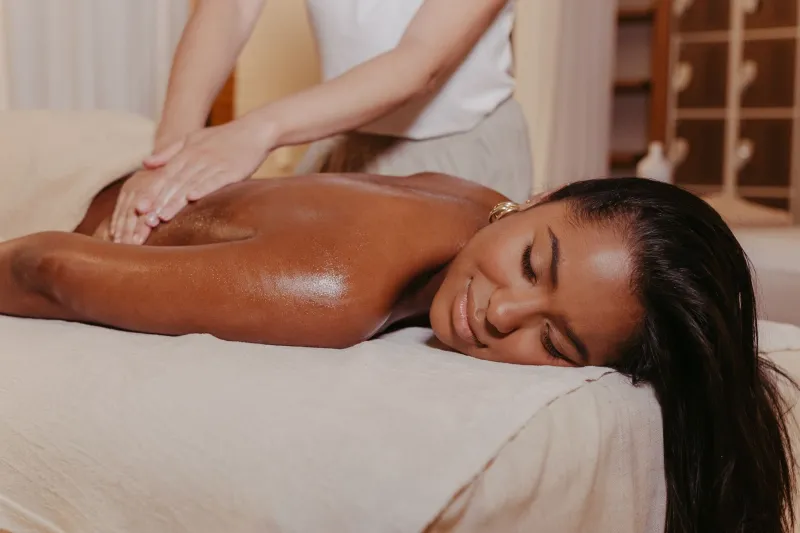
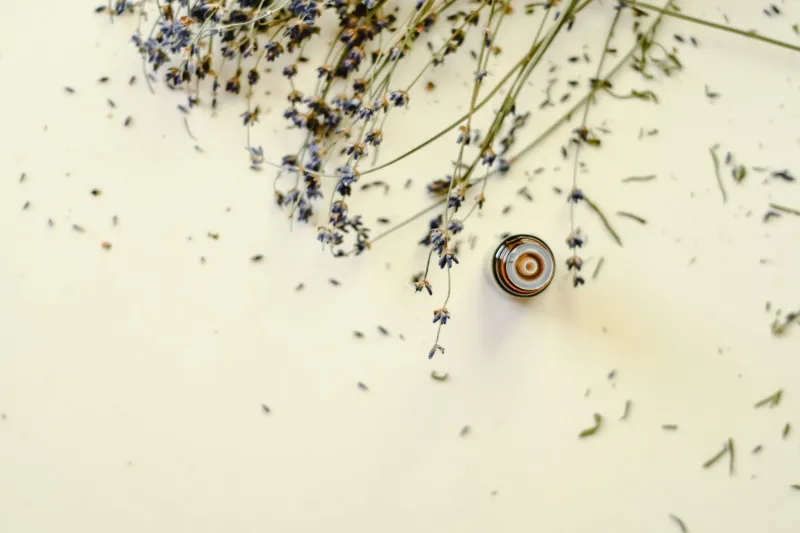
In the context of therapeutic aromatherapy, this pathway becomes profoundly useful. When a skilled practitioner introduces specific botanical compounds — lavender esters, hinoki terpenes, yuzu limonene — during a state of deep physical relaxation, the amygdala receives those scent signals simultaneously with input from the parasympathetic nervous system signaling safety and ease. The two streams of information are encoded together.
The result is a paired memory: a specific fragrance linked, at a neurological level, to calm.
Why Repetition Is Not Required
Conventional wisdom around habit formation suggests that behavioral change requires repetition over weeks or months. The olfactory-amygdala pathway challenges this assumption in an important way. Because emotional memories formed through scent are encoded with unusual intensity — particularly when the body is in a state of heightened receptivity, as it is during massage — a single, well-structured exposure can establish a durable associative anchor.
Research published in journals studying affective neuroscience has demonstrated that fear memories formed through olfactory conditioning are among the most resistant to extinction of any memory type. The same mechanism that makes trauma-linked scents so persistent works in reverse for positively encoded fragrances. A deeply pleasant, deeply relaxing scent experience can create an equally persistent association with safety and restoration.
This is precisely why the Tokyo aromatherapy context matters. The city's traditional approach to sensory healing is not incidental. The botanicals used — many of which are native to Japan and carry a cultural and historical weight that adds psychological depth to the experience — are introduced deliberately, in carefully calibrated concentrations, by practitioners trained to read the body's responses in real time. The session is not simply a pleasant-smelling massage. It is, in neurological terms, a precision conditioning event.
The Stress Response Recalibration
Chronically stressed individuals — a category that describes a significant portion of the American workforce — often exhibit what researchers call amygdala hyperreactivity. The threat-detection system becomes sensitized through repeated activation, lowering the threshold for stress responses and making genuine relaxation increasingly difficult to access.
This is why so many Americans report that conventional spa treatments feel good but do not fundamentally change anything. A massage that does not engage the olfactory-emotional system remains largely a physical event. The muscles relax. The cortisol dips briefly. But the amygdala, unmoved, continues its vigilant surveillance.
Aromatherapy-integrated massage, particularly when delivered with the intentionality characteristic of Tokyo's wellness tradition, reaches the amygdala directly. With repeated sessions — or even a single session of sufficient depth and sensory richness — the brain begins to receive new information about its own capacity for safety. The nervous system, in effect, updates its baseline.
Visitors to Diana Tokyo Aroma Massage frequently describe this shift in language that is less clinical and more personal: a sense that the anxiety they carried for years has become, somehow, quieter. Not absent. But quieter. And more importantly, more manageable.
Activating the Memory After You Leave
One of the most practical implications of olfactory memory science is that the healing does not need to remain confined to the treatment room. Because scent associations are retrievable through re-exposure, the calm encoded during a Tokyo aromatherapy session can be partially reactivated — deliberately — by returning to the same or similar botanical fragrances at home.
This is not the same as diffusing lavender oil and hoping for the best. The specific compounds matter. High-quality hinoki essential oil, sourced from the same Japanese cypress used in traditional treatments, carries a chemical profile distinct from generic cedar or pine. Authentic yuzu extract behaves differently in the body than lemon or grapefruit. The closer the fragrance match, the more precisely the olfactory memory can be retrieved.
For Americans returning from a Tokyo wellness visit, establishing a simple daily ritual around these specific botanicals — a few minutes of intentional stillness with a quality diffuser, or a brief self-massage with a complementary oil — can meaningfully extend the neurological benefits of the original session.
Why This Changes the Calculus of Wellness Investment
The American wellness industry is built, in many ways, on the subscription model. Monthly memberships, weekly appointments, recurring purchases. The implicit message is that benefits are ongoing only as long as payments are ongoing.
The neuroscience of olfactory memory suggests a different framework — one that aligns more naturally with how Tokyo's healing culture has always understood the relationship between experience and lasting change. A single, deeply intentional session, conducted in an environment of genuine sensory sophistication, can deposit something into the nervous system that no monthly membership can replicate: a durable internal reference point for what genuine calm actually feels like.
For the burned-out American professional who has tried every productivity hack and wellness subscription the market offers, this is perhaps the most radical proposition of all. Not more. Not faster. One experience, done with complete attention, in a place that has been refining this art for generations.
The amygdala, it turns out, has a long memory. The question is what you give it to remember.