When Stillness Becomes the Work: How Japan's Philosophy of Meaningful Pause Is Quietly Healing Burned-Out Americans

When Stillness Becomes the Work: How Japan's Philosophy of Meaningful Pause Is Quietly Healing Burned-Out Americans
There is a particular kind of exhaustion that no vacation seems to fix. You board the flight home from Cancún or Nashville or whatever destination promised renewal, and somewhere over the Midwest you realize that you are, inexplicably, more depleted than when you left. The itinerary was full. The Instagram feed looks enviable. And yet the body is sending a very different report.
America has a productivity problem — not in the sense of making too little, but in the sense of being constitutionally unable to stop making. This extends, with uncomfortable irony, into the very leisure time meant to repair the damage. We optimize our vacations. We schedule our rest. We treat recovery like a deliverable.
Japan has a different idea entirely. And for the growing number of Americans traveling to Tokyo in search of something they cannot quite name, that difference is turning out to be exactly the thing they needed.
What 'Ma' Actually Means — and Why It Doesn't Translate Easily
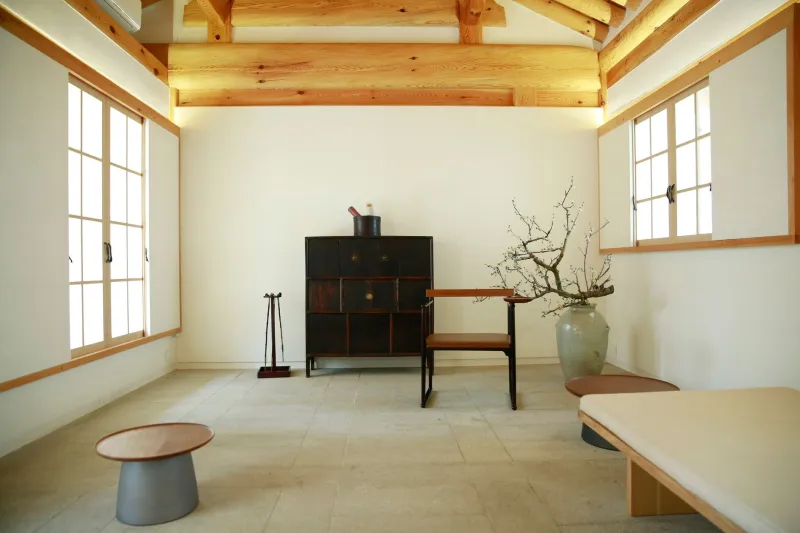
The Japanese concept of Ma (間) is frequently described as "negative space" or "pause," but both translations flatten something that is, in practice, far richer. Ma is not simply the absence of something. It is the presence of meaningful emptiness — the breath between musical notes that gives a melody its shape, the silence in a conversation that allows a thought to fully land, the open room in a traditional Japanese home that holds nothing and, in doing so, holds everything.
In Japanese aesthetics, architecture, music, and even interpersonal communication, Ma is understood as an active force rather than a passive gap. It is not what you do with the time left over after productivity has taken its share. It is, itself, the point.
For Americans raised on the cultural gospel that idle hands are the devil's workshop, this requires a genuine recalibration of values — not just behavior.
The Guilt at the Center of American Rest
Consider what happens when a high-functioning American professional actually sits still. Within minutes, often seconds, the internal monologue begins. I should be checking email. I should be at the gym. I should be doing something. The discomfort is not laziness — it is conditioning. Decades of messaging that equate worth with output have left most Americans physiologically incapable of tolerating stillness without framing it as either earned reward or stolen time.
This is why wellness retreats so frequently fail the people who need them most. The executive who books a spa weekend brings the same achievement-oriented mindset to the massage table. They are not resting; they are completing a rest task. The distinction matters enormously to the nervous system, which is not fooled by the performance of relaxation.
True restoration — the kind that actually reverses the neurological toll of chronic stress — requires something the American wellness industry rarely provides: permission to simply be without any productive justification for doing so.
Why Tokyo Becomes the Catalyst
There is something about physical distance that loosens the grip of habitual thinking. When an American lands in Tokyo, the sheer foreignness of the environment creates a natural interruption in the loop. The familiar cues that trigger work mode — the laptop, the home office, the social obligations — are absent. What remains is a city that, paradoxically, embodies Ma at every level.
Tokyo is one of the most dynamic urban environments on earth, yet it holds within it pockets of extraordinary quiet. The deliberate pacing of a traditional tea ceremony. The unhurried choreography of a kaiseki meal. The way a skilled practitioner pauses before beginning a treatment, creating a moment of shared stillness that signals: this time is different.
At Diana Tokyo Aroma Massage, that philosophy of intentional pause is woven into every aspect of the experience. The session does not begin the moment you lie down. It begins in the transition — the careful dimming of light, the measured introduction of a chosen essential oil, the unhurried acknowledgment that you have arrived somewhere worth arriving. This is Ma made tangible.
Aromatherapy as a Practice in Meaningful Emptiness
Aromatherapy massage, when practiced with genuine craft, is itself an expression of Ma. The skilled therapist does not fill every moment with movement. There are deliberate pauses — a sustained hold at the base of the skull, a moment of stillness at the sacrum — that are not rest from the work but are, in fact, the work itself. The nervous system processes in these gaps. The body integrates. The mind, given nothing to respond to, finally releases its grip.
The botanical oils central to this practice deepen that effect considerably. Hinoki cypress — harvested from ancient Japanese forests and prized for centuries in ceremonial and healing contexts — carries compounds that measurably reduce cortisol and promote parasympathetic nervous system activity. Yuzu, with its bright, clarifying citrus character, has been shown in clinical settings to modulate anxiety responses. These are not merely pleasant fragrances. They are chemical messengers that communicate, at a biological level, that safety has arrived and vigilance may now rest.
For an American nervous system that has been running threat-detection protocols more or less continuously, this message can feel almost startlingly unfamiliar.
The Return Is the Point
There is a misconception worth addressing directly: that taking time for deep, unstructured restoration is an escape from real life. The Ma philosophy inverts this entirely. In the Japanese worldview, the pause is not a retreat from engagement — it is what makes genuine engagement possible. The silence between notes is what makes music coherent. The stillness before action is what makes action purposeful.
When Americans return from a session at Diana Tokyo Aroma Massage — or from a longer immersion in Tokyo's wellness culture — they frequently report not just feeling better, but thinking more clearly. Priorities reorganize themselves without effort. Creative problems that had been stuck begin to move. Relationships that felt strained under the weight of constant busyness reveal themselves to be fundamentally intact.
This is not coincidence. This is the predictable result of allowing the mind and body the conditions they require to perform the maintenance that stress perpetually defers.
Booking a Pause That Actually Counts
If you are planning a visit to Tokyo — whether for the first time or the fifth — consider building Ma into the architecture of your trip rather than squeezing it into the margins. Resist the urge to fill every hour. Allow the city's natural rhythms to set the pace. And at some point during your stay, give yourself the particular gift of an aromatherapy session that is not a checkbox on a to-do list, but a genuine encounter with stillness.
You will not be doing nothing. You will be doing something Americans rarely permit themselves: returning, deliberately and without apology, to the self that existed before the productivity machine got its hands on you.
That self, it turns out, has been waiting with considerable patience.