Same Budget, Completely Different Body: What $200 Buys You at a Tokyo Spa Versus a Vegas Wellness Resort
Let's be direct: two hundred dollars is not an insignificant amount of money to spend on a massage. Whether you're a seasoned spa-goer or someone finally investing in your own recovery, you want to know that the hour or two you spend on that table is genuinely worth it — not just pleasant in the moment, but meaningful in some lasting way.
For years, the American default answer to that question pointed toward Las Vegas. The spa floors of the major Strip resorts are polished, professional, and impressively marketed. But a growing number of US travelers have started asking a different question: what if that same $200 went further — considerably further — in Tokyo?
Having explored both circuits with some regularity, the comparison is worth making carefully and honestly.
What $200 Gets You in Las Vegas
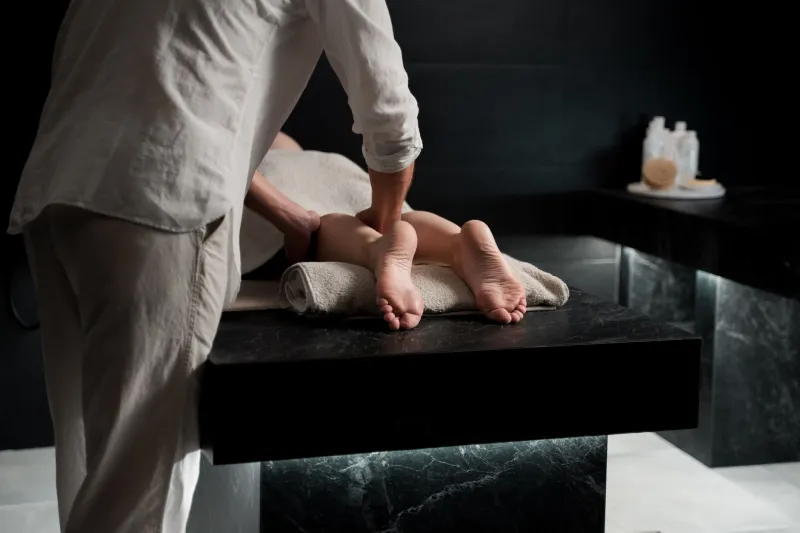
At most mid-tier Vegas resort spas, a $200 budget covers a standard 50-minute Swedish or deep tissue massage, with a modest aromatherapy upgrade available for an additional fee. The facilities are typically impressive from an architectural standpoint — marble finishes, ambient lighting, robes of reasonable quality. You will be comfortable. You will likely feel relaxed.
What you will also encounter: upsell pressure at nearly every stage of the experience. The intake form is frequently a checklist of add-ons. The therapist, though skilled, is often working through a high-volume rotation. The essential oils used are generally synthetic or low-grade blends, labeled with evocative names but carrying little of the botanical depth those names imply. The ambiance, while aesthetically appealing, is ultimately designed around the broader resort ecosystem — which means noise bleeds in from adjacent hallways, and the transition from treatment room back to casino floor takes approximately ninety seconds.
The experience is not bad. But it is, in many ways, a product rather than a practice.
What $200 Gets You in Tokyo
In Tokyo — and specifically within the kind of dedicated aromatherapy wellness studios that the city does exceptionally well — the same budget enters an entirely different category of experience.
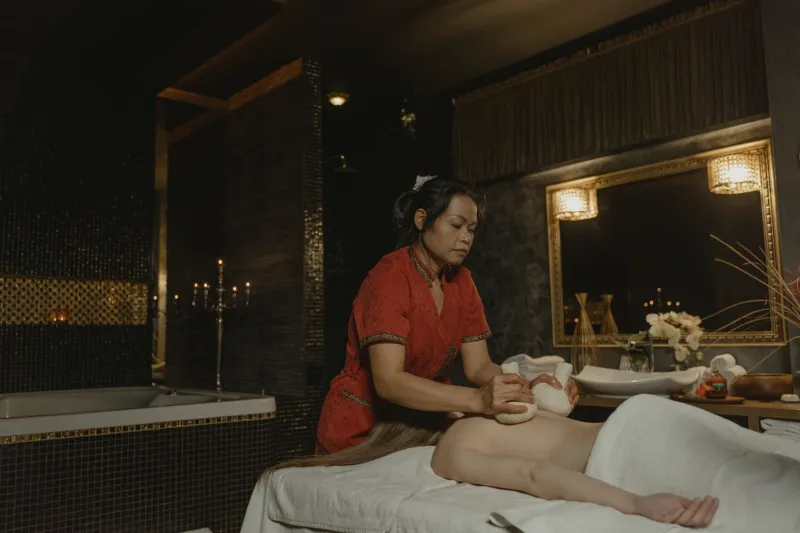
First, the ingredients. Japanese aromatherapy draws from a botanical tradition that is centuries deep. Yuzu, hinoki cypress, and cherry blossom are not marketing terms here; they are living elements of Japanese culture, harvested with care and used in concentrations that carry genuine therapeutic effect. When a Tokyo therapist applies a hinoki-based oil to your back, the cedar-like compound released has documented calming properties on the autonomic nervous system. This is not incidental. It is intentional.
Second, the duration and attentiveness. A $200 treatment in Tokyo typically runs 80 to 90 minutes as a baseline, not 50. The intake process involves a genuine consultation — your sleep quality, your stress patterns, your physical complaints — rather than a liability waiver. The therapist's technique reflects a philosophy of whole-body awareness rather than isolated muscle groups. Pressure, rhythm, and oil selection are adjusted in real time based on how your body responds.
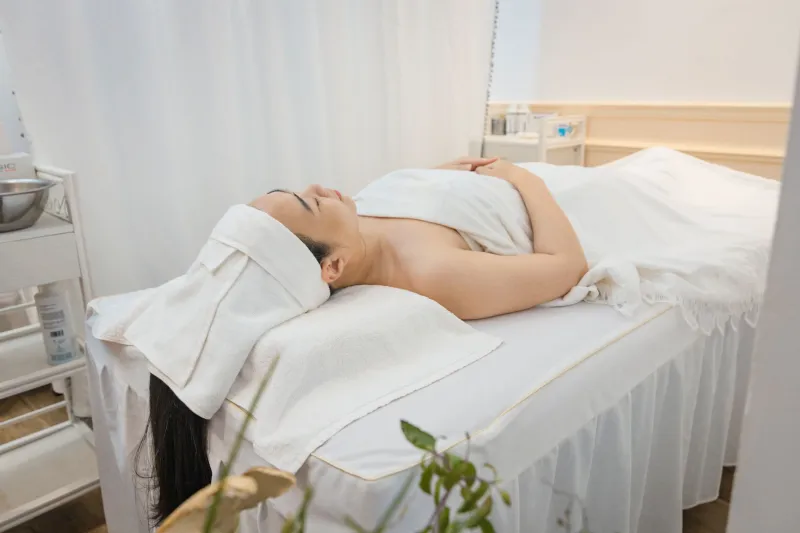
Third, the environment. Tokyo wellness studios operate with a quietness that is almost architectural in nature. The concept of ma — the Japanese appreciation for meaningful negative space — shapes everything from the layout of the room to the silence between the therapist's movements. There are no adjacent slot machines. There is no ambient hum of a resort corridor. There is, quite simply, stillness.
The Ingredient Question Is More Important Than It Sounds
American travelers often underestimate how much the quality of aromatherapy oils shapes the actual physical outcome of a massage. Synthetic fragrance oils smell pleasant but interact with the skin differently than cold-pressed or steam-distilled botanical extracts. They do not penetrate the dermal layers in the same way. They do not engage the olfactory-limbic pathway — the neurological route through which scent influences mood, memory, and stress hormone regulation — with the same potency.
In a Tokyo aromatherapy setting, the oils used are typically sourced from single-origin Japanese botanicals. The difference is not subtle. Guests frequently report a quality of calm following treatment that feels qualitatively different from standard relaxation — less like having been soothed and more like having been genuinely reset.
The Lasting-Results Test
Here is perhaps the most practical metric: how do you feel 48 hours after the treatment?
After a high-end Vegas spa session, most guests report feeling relaxed for the remainder of that day, occasionally into the following morning. By day two, the demands of travel, jet lag, and daily stress have generally erased the benefits.
After a well-executed Tokyo aromatherapy massage, the recovery arc is measurably different. Sleep quality in the nights following treatment tends to improve. The nervous system — particularly if you arrived carrying the physiological weight of a long-haul flight — responds to the combination of skilled manual therapy and genuine botanical compounds in ways that extend well beyond the treatment window. Guests returning to the United States frequently note that they felt better on the flight home than they had on the flight over.
This is not anecdote for its own sake. It reflects the cumulative effect of superior ingredients, longer treatment duration, and a therapeutic philosophy built around restoration rather than comfort.
A Practical Framework for Your First Tokyo Wellness Budget
If you are allocating $200 toward wellness during a Tokyo visit, here is a framework worth considering:
Prioritize your first full day or the day after arrival. Jet lag from the US to Japan is significant — typically a 13 to 14-hour time difference. An aromatherapy massage within 24 hours of landing accelerates nervous system recalibration and dramatically improves your first nights of sleep in the city.
Choose a studio that offers a pre-treatment consultation. This is a reliable indicator of treatment quality. Studios that ask about your physical history and stress profile are operating from a wellness philosophy, not a service-industry script.
Request Japanese botanical oils specifically. Yuzu for mood elevation and immune support, hinoki for deep calm, and sakura for gentle emotional restoration are all worth requesting by name. A knowledgeable therapist will guide you based on your stated needs.
Book 80 minutes at minimum. In Tokyo, this is typically the standard session length at quality studios and falls comfortably within a $200 budget. The additional time allows for a complete treatment arc — opening, deepening, and integration — rather than a truncated session that leaves the body partially addressed.
Consider a second shorter session mid-trip. If your stay is five days or longer, a 45-minute targeted treatment midway through your visit compounds the benefits of the first session and sustains the recovery you initiated on arrival.
The Honest Bottom Line
Two hundred dollars spent at a Tokyo aromatherapy studio is not the same transaction as two hundred dollars spent at a Vegas resort spa. The physical environment is quieter, the ingredients are more potent, the treatment is longer, and the philosophy behind it is older and more considered. The results last longer and reach deeper.
None of this is meant to suggest that Las Vegas lacks value as a travel destination. But if the specific question is where your wellness dollars will do the most work for your body — where you will leave genuinely restored rather than temporarily comfortable — Tokyo answers that question with unusual clarity.
At Diana Tokyo Aroma Massage, we have had the privilege of welcoming American guests at every stage of that discovery. The ones who arrive skeptical tend to leave converted. The ones who arrive knowing what to expect tend to leave planning their return.