What Happens to Your Body on a 14-Hour Flight — and Why Aromatherapy Should Be Your First Stop in Tokyo

Most American travelers arrive in Tokyo with a checklist already running: Shibuya Crossing, Tsukiji Market, a ramen bowl before noon. What rarely appears on that list is a quiet, intentional hour on a massage table surrounded by the scent of hinoki and yuzu. That is a significant oversight — and the science behind long-haul aviation physiology makes a compelling argument for reconsidering the order of things.
Flying from the US West Coast to Tokyo means enduring roughly 11 to 14 hours in a pressurized aluminum tube traveling at 35,000 feet. From the East Coast, that number climbs higher. By the time you clear customs at Haneda or Narita, your body has been subjected to a cascade of stressors that most people either dismiss or simply do not recognize. Understanding what those stressors are — and how specific aromatic compounds work against them — changes the way a thoughtful traveler plans the first 48 hours of any Tokyo visit.
What a Transpacific Flight Actually Does to Your Body
The cabin pressure inside a commercial aircraft is calibrated to the equivalent of roughly 6,000 to 8,000 feet above sea level. At that altitude, blood oxygen saturation drops measurably, and the body's ability to regulate temperature, process nutrients, and maintain alertness is quietly compromised. The humidity inside the cabin hovers near 10 to 20 percent — significantly drier than the Mojave Desert — which accelerates transepidermal water loss and leaves the skin barrier weakened and reactive.
Simultaneously, the body's circadian rhythm — the internal clock that governs sleep, hormone release, digestion, and immune function — is thrown into disarray by the 13 to 16 hour time difference between the continental United States and Japan. The hypothalamus, which coordinates this rhythm, receives conflicting signals from light exposure, meal timing, and physical activity. The result is a sustained elevation of cortisol, the body's primary stress hormone, which suppresses the immune system, impairs cognitive clarity, and disrupts the restorative sleep architecture that the body urgently needs.
There is also the matter of prolonged immobility. Sitting in a fixed position for more than ten hours restricts lymphatic circulation, causes fluid to pool in the lower extremities, and creates muscular tension — particularly through the hip flexors, lower back, and cervical spine — that can persist for days if left unaddressed.
This is not a picture of mild inconvenience. It is a picture of systemic physiological disruption.
Why Aromatherapy Intervenes at the Right Level
Aromatherapy is not merely pleasant — it is pharmacologically active. When inhaled, volatile aromatic molecules travel through the olfactory epithelium and interact directly with the limbic system, the region of the brain responsible for emotional regulation, memory, and the modulation of the autonomic nervous system. This pathway bypasses the digestive system entirely, which means the effects are rapid and measurable.
Several essential oils used in traditional Japanese aromatherapy practice have been studied specifically in the context of stress response and circadian disruption.
Hinoki cypress (Chamaecyparis obtusa), a wood native to Japan and deeply embedded in the country's bathing and wellness culture, has been shown in peer-reviewed research to lower salivary cortisol concentrations and reduce sympathetic nervous system activity. For a traveler whose cortisol has been elevated for fourteen hours, this is not a trivial benefit. Hinoki's grounding, resinous scent also carries a psychological weight — it signals arrival, stillness, and the beginning of something restorative.
Yuzu, the Japanese citrus whose fragrance is both tart and warmly floral, has demonstrated anxiolytic properties in clinical settings and has been associated with increased alertness and improved mood without the stimulatory spike of caffeine. For travelers navigating the disorienting first hours after landing — when the body insists it is 3 a.m. even as Tokyo blazes with midday light — yuzu offers a gentle recalibration rather than an artificial jolt.
Lavender remains one of the most rigorously studied aromatic compounds in Western clinical literature, with documented effects on reducing heart rate variability, lowering blood pressure, and supporting sleep onset. When incorporated into a post-flight massage, it complements the physical manipulation of tissue with a neurochemical invitation toward rest.
The Case for Booking Before You Sightsee
The conventional approach to spa treatments is to schedule them near the end of a trip — a reward after the itinerary has been completed. This logic, while understandable, is physiologically backwards for long-haul travelers.
The first 24 to 48 hours after a transpacific flight represent the window of greatest physiological vulnerability. Cortisol is elevated. The immune system is suppressed. The skin barrier is compromised. Sleep architecture is fragmented. Every hour spent pushing through sightseeing without addressing these conditions extends the recovery timeline.
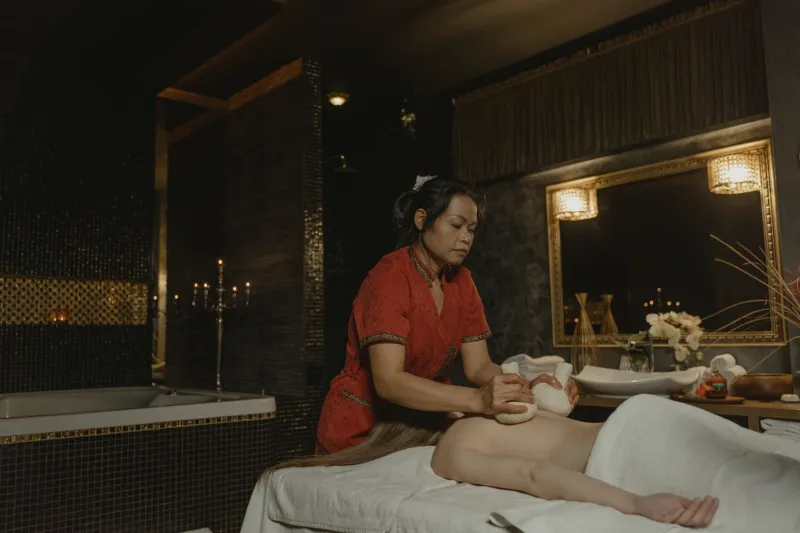
An aromatherapy massage scheduled within the first several hours of arrival — after a shower and a light meal, but before attempting to stay awake until an arbitrary local bedtime — accomplishes several things at once. The manual manipulation of soft tissue promotes lymphatic drainage and reduces the peripheral edema that accumulates during long flights. The parasympathetic nervous system activation triggered by therapeutic touch begins to lower cortisol and prepare the body for genuine sleep. And the aromatic compounds inhaled throughout the session begin the work of signaling to the brain that the journey is over and recovery has commenced.
A Practical Treatment Timeline for a Tokyo Trip
For travelers spending five to seven days in Tokyo, the following spacing of sessions tends to yield the most cumulative benefit.
Day One (Arrival Day): A 60 to 90-minute full-body aromatherapy massage using hinoki and lavender. The goal here is cortisol reduction, lymphatic movement, and nervous system downregulation. This session should be followed by sleep — ideally at least seven hours — rather than an evening out.
Day Three: A mid-trip treatment focused on muscular recovery from the increased walking and activity that Tokyo inevitably demands. Yuzu and ginger blends are well-suited to this session, addressing both energetic fatigue and localized muscle tension.
Day Six or Final Evening: A closing session oriented toward preparing the body for the return flight. Lavender-dominant blends combined with gentle circulatory work help consolidate the restoration achieved during the trip and reduce the physiological shock of the eastward crossing home.
Arriving Well Is a Form of Respect — for the Journey and for Yourself
There is something worth noting about the Japanese concept of omotenashi — the anticipatory hospitality that underpins so much of Tokyo's service culture. It operates on the assumption that a guest's needs are understood before they are expressed. In that spirit, the city offers something that many American travelers do not think to receive: permission to arrive slowly, to allow the body to land before the itinerary begins.
At Diana Tokyo Aroma Massage, treatments are designed with exactly this kind of traveler in mind — someone who has crossed an ocean, whose body carries the evidence of that crossing, and who deserves more than a cursory night's sleep before being asked to keep pace with one of the world's most vibrant cities. The science supports it. The experience confirms it.
Book your first session before you plan your first outing. Your body will recognize the wisdom of that choice long before your mind does.