The Space Between: How Tokyo's Philosophy of Sacred Silence Unlocks a Depth of Healing American Spas Have Yet to Discover
The Space Between: How Tokyo's Philosophy of Sacred Silence Unlocks a Depth of Healing American Spas Have Yet to Discover
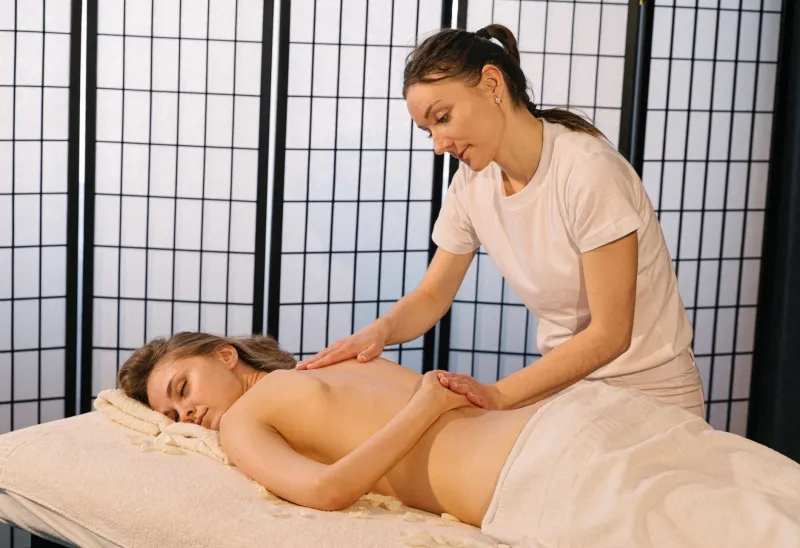
There is a moment, somewhere in the middle of a well-conducted Tokyo aromatherapy session, when the therapist pauses. Not to adjust technique, not to reach for a different oil, not to ask if the pressure is acceptable. Simply — pauses. The room holds its breath. The silence is not accidental. It is, in fact, the treatment.
This is Ma — one of the most quietly radical concepts in Japanese culture, and one that is almost entirely absent from the American wellness lexicon.
What Ma Actually Means — and Why Translation Falls Short
Most English-language guides will tell you that Ma (間) translates loosely to "negative space" or "meaningful pause." That is accurate as far as it goes, but it barely scratches the surface. In Japanese aesthetics, architecture, music, and interpersonal communication, Ma is not the absence of something — it is a presence in its own right. It is the silence between musical notes that gives a melody its emotional weight. It is the empty corner of a room that allows the eye to rest and the mind to settle. It is the unhurried breath a speaker takes before saying something important.
In the context of bodywork and healing, Ma becomes something even more specific: a deliberate, almost ceremonial withholding of stimulation, designed to allow the nervous system to fully absorb what has just been offered to it. It is the understanding that the body does not heal during intervention — it heals in the space that follows.
American wellness culture, for all its sophistication, has largely built its identity around the opposite premise.
The Noise Problem in American Spa Culture
Walk into most high-end American spas — whether in Manhattan, Beverly Hills, or the resort corridors of Scottsdale — and you will encounter a particular kind of engineered atmosphere. Curated playlists at precisely calibrated volumes. Aromatherapy diffusers running continuously. Therapists trained to check in verbally, to narrate transitions, to ensure the client always feels attended to. These are not failures of intention. They reflect a genuine and well-meaning effort to deliver comfort.
But they also reflect something deeper about American wellness culture's relationship with silence: a subtle but persistent discomfort with it. In a culture shaped by productivity metrics, constant connectivity, and the ambient noise of urban life, silence can feel less like relief and more like a void waiting to be filled. American spa environments often preemptively fill that void — and in doing so, they inadvertently deny clients the one ingredient that cannot be purchased, scheduled, or engineered: genuine stillness.
The result is relaxation that is pleasant, even significant — but rarely transformative. The nervous system unwinds to a point, then plateaus, held in a kind of gentle suspension by the very stimuli designed to soothe it.
How Tokyo Treatment Rooms Practice Ma as Active Medicine
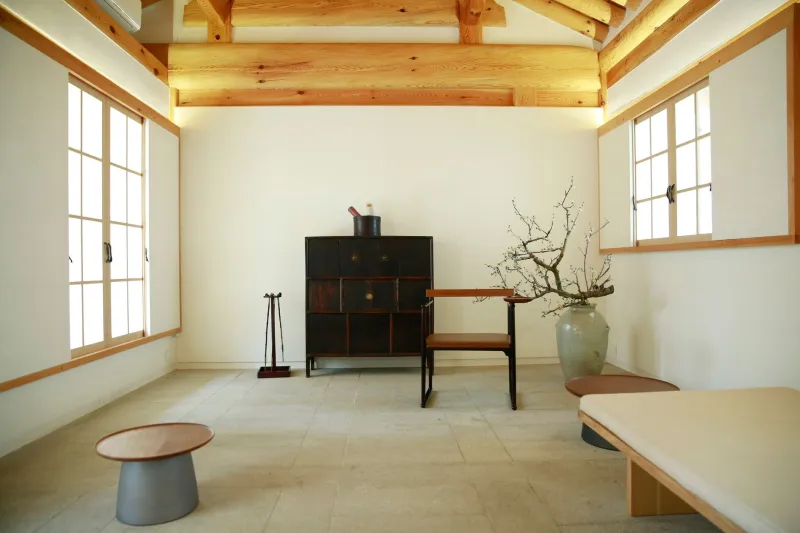
At a Tokyo aromatherapy studio, the approach is architecturally different. The silence is not a backdrop — it is a structural element of the session itself, as intentional as the selection of essential oils or the sequencing of massage strokes.
A therapist trained in the philosophy of Ma understands that after a particular technique — say, a sustained compression along the trapezius, or a slow effleurage movement down the length of the back — the body requires uninterrupted time to register what has occurred. Neural pathways need a moment of quiet to consolidate the shift. Muscles that have been encouraged to release need stillness to complete that release without the interruption of new sensation.
So the therapist pauses. Hands may rest lightly on the body, or withdraw entirely. The breath in the room slows. And in that pause — that Ma — something happens that no amount of continued technique can produce. The body stops waiting for the next thing. It arrives, fully, in the present moment. And that arrival is where genuine restoration begins.
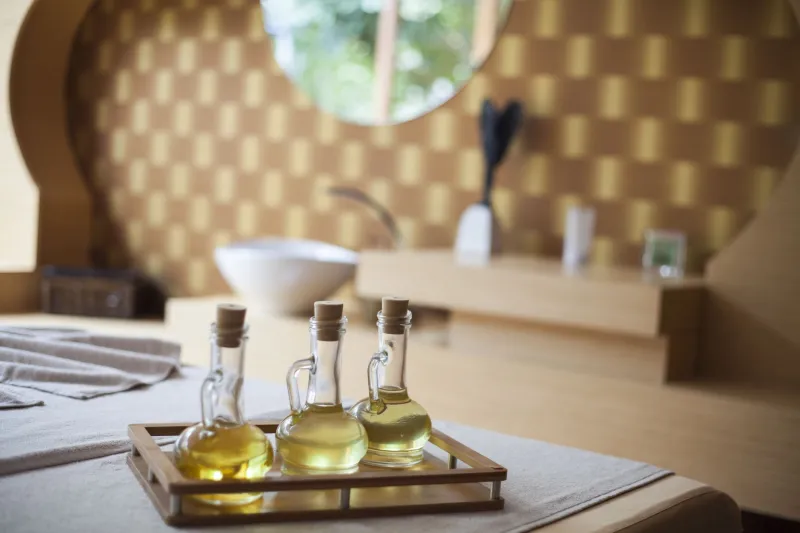
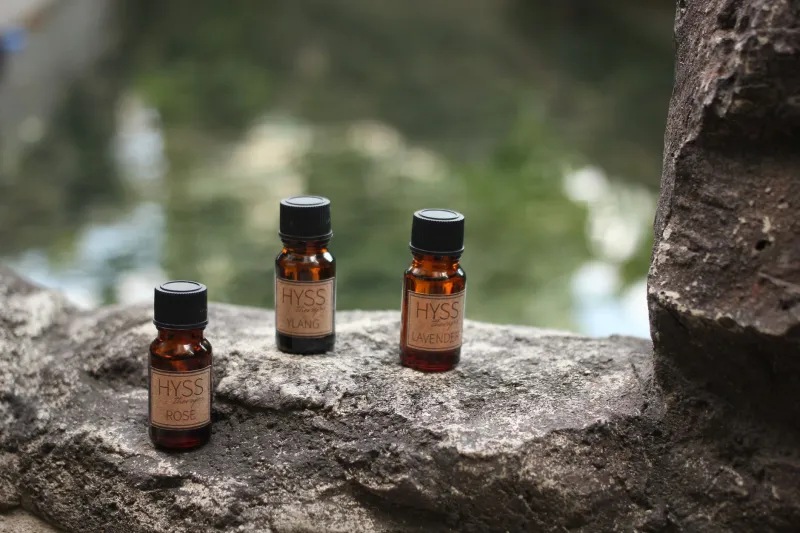
The aromatherapy dimension amplifies this process considerably. Scents such as hinoki cypress, yuzu, or aged sandalwood are not simply pleasant additions to the environment — they are chosen for their documented effects on the limbic system, the brain's emotional and memory processing center. When those scents are introduced into a room that is genuinely quiet, the olfactory system has space to respond without competition. The effect is qualitatively different from inhaling the same oils in a room filled with ambient music and conversational noise.
Why This Particular Stillness Is So Unfamiliar to American Visitors
Many Americans who visit Tokyo for a spa experience report a striking initial reaction to this quality of silence: discomfort. Not distress, but a kind of restlessness — a reflexive urge to fill the quiet with thought, with planning, with the mental to-do list that has followed them across the Pacific.
This reaction is not a personal failing. It is, in fact, evidence of exactly the condition that Ma-informed treatment is designed to address. The hyperactive default mode network — the part of the brain responsible for self-referential thinking, rumination, and the sensation of being perpetually "on" — does not stand down simply because the body is horizontal and the lights are dim. It requires a specific quality of environmental cue to release its grip. Sustained, intentional silence is one of the most reliable of those cues.
The discomfort, when it arises, is the sound of that transition beginning.
Preparing Yourself to Receive What Tokyo's Silence Offers
For American visitors planning their first Tokyo aromatherapy session, a small amount of mental preparation can significantly deepen the experience. The following approaches are worth considering before you arrive.
Release the expectation of entertainment. A Tokyo treatment room is not designed to distract you from yourself — it is designed to return you to yourself. Arrive expecting stillness rather than ambiance, and you will not interpret the quiet as an absence.
Practice sitting with silence before your session. Even five minutes of intentional quiet in your hotel room — no phone, no podcast, no television — begins to lower the nervous system's threshold for stimulation. You are, in effect, preparing the soil before planting.
Resist the urge to mentally narrate the experience. Many first-time visitors spend portions of their session cataloguing sensations, formulating opinions, or composing the social media caption they will write afterward. Notice when this is happening, and gently redirect attention to the breath or the physical sensation of the massage itself.
Allow the pauses. When a therapist creates a moment of Ma — when hands still and the room settles — resist the impulse to interpret it as an error or a lapse. It is the treatment. Meet it with the same openness you would offer any other element of the session.
Give yourself time afterward. The effects of Ma-informed bodywork often deepen in the hour following a session. Scheduling a quiet walk, a tea ceremony, or simply unstructured time in a Tokyo garden immediately after your treatment allows the restoration to complete itself.
The Healing That Silence Makes Possible
There is a reason that the most enduring wellness traditions in the world — whether Japanese, Ayurvedic, or contemplative in nature — have always understood silence as a therapeutic agent rather than a mere absence of noise. The nervous system was not designed for the continuous stimulation that modern life, and even modern wellness culture, delivers to it. It was designed for rhythms of engagement and withdrawal, of input and integration.
Ma honors that design. It asks nothing of you except the willingness to stop — briefly, completely, and without agenda — and allow the body to do what it has always known how to do.
In the heart of one of the world's most dynamic cities, Tokyo's aromatherapy culture has preserved something that most of the modern world has quietly discarded: the understanding that the pause is not the end of the healing. It is the healing itself.