Stop Collecting Stamps, Start Collecting Stillness: The Case Against the Exhausting American Vacation

There is a particular kind of exhaustion that arrives not from neglect, but from effort. Americans know it intimately. It is the fatigue of the traveler who has done everything correctly — booked the flights, researched the neighborhoods, photographed the landmarks, queued for the restaurant with the three-month waitlist — and yet boards the return flight home feeling, somehow, worse than when they departed.
This is not a personal failure. It is, in many respects, a cultural one.
The Productivity Trap Has Followed You Overseas
The United States has long cultivated a peculiar relationship with leisure. Productivity is not merely admired here; it is moralized. To rest is to fall behind. To pause is to waste. These values, largely invisible in daily life because they are so thoroughly normalized, do not dissolve at the airport security line. They travel with you.
The result is what behavioral researchers sometimes call the "busy tourist paradox" — the tendency of high-achieving travelers to approach vacation with the same performance-oriented mindset they apply to their professional lives. Itineraries are optimized. Hours are accounted for. The day is measured not by how it felt, but by how much it contained.
A 2019 study published in the Journal of Happiness Studies found that the subjective wellbeing benefits of vacation begin to erode within days of returning home — and in many cases, the erosion is hastened by trips characterized by high activity levels and low recovery time. In short, the more aggressively Americans sightsee, the shorter the psychological half-life of their trip.
What Your Cortisol Levels Are Actually Doing
The physiology of a "productive" vacation is worth examining honestly. Long-haul flights elevate cortisol — the body's primary stress hormone — through a combination of sleep disruption, cabin pressure, dehydration, and circadian displacement. Arriving in a foreign city and immediately subjecting the body to navigational stress, sensory overload, and physical exertion does not interrupt this hormonal cascade. It extends it.
Cortisol, when chronically elevated, impairs memory consolidation, suppresses immune function, and disrupts the quality of sleep — which means that the traveler who rushes from temple to museum to food market on day one of their Tokyo trip may be encoding fewer lasting memories, not more. The brain under stress is a brain in triage mode, not a brain available for the kind of open, absorptive presence that makes travel meaningful.
Restorative interventions — extended rest, deliberate breathwork, and therapeutic touch such as aromatherapy massage — have been shown in multiple clinical contexts to measurably lower salivary cortisol levels within a single session. This is not anecdote. It is biochemistry.
Tokyo Asks a Different Question of Its Visitors
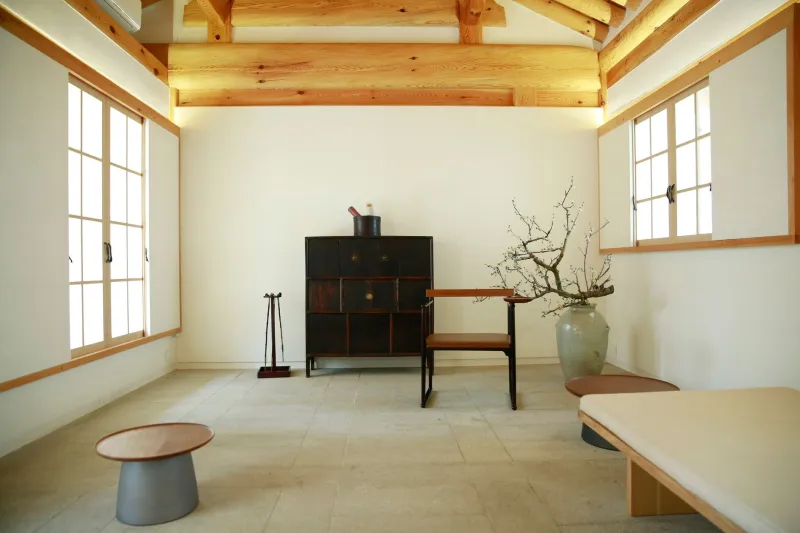
What makes Tokyo a particularly instructive setting for this conversation is that the city itself embodies a philosophy of purposeful restraint. Japanese wellness culture does not treat rest as the absence of activity. It treats rest as a discipline — something practiced with intention, attended to with craft, and regarded as essential to a functioning life rather than peripheral to it.
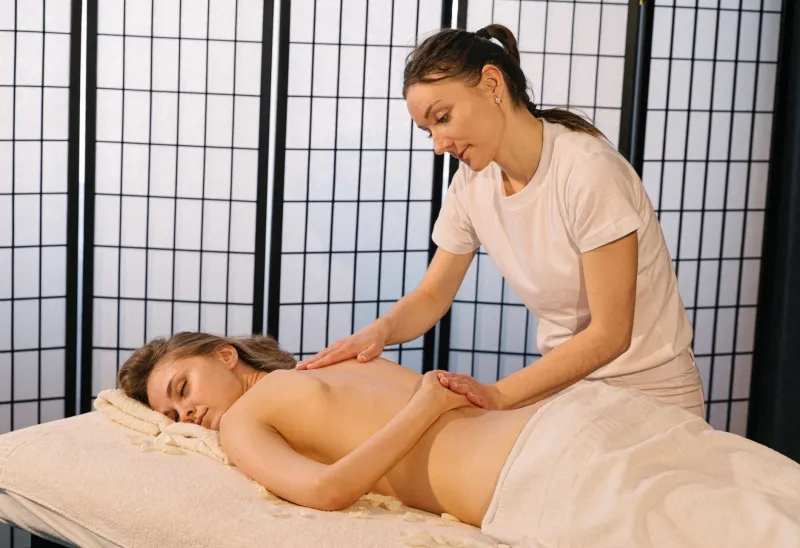
This orientation is visible in the architecture of a well-designed aromatherapy session. The carefully selected essential oils — hinoki cedar to ground the nervous system, yuzu to brighten a fatigued mind, lavender to initiate the parasympathetic response — are not decorative choices. They are therapeutic ones, calibrated to guide the body through a specific physiological transition. The pressure, the pace, the temperature of the room: each element is considered in relation to the others, composing an environment that the overwhelmed American nervous system rarely encounters at home.
At Diana Tokyo Aroma Massage, this philosophy is foundational. The treatments are designed not merely to feel pleasant, but to accomplish something measurable — to move a guest from the activated, cortisol-flooded state of the modern traveler into a condition of genuine parasympathetic recovery. That shift, when it happens fully, is not subtle. Guests frequently describe it as the first moment of real quiet they have experienced in months.
The Vacation Hangover Is Not Inevitable
American travelers have largely accepted the post-vacation crash as an unavoidable cost of travel. The week after returning from a trip is expected to be difficult — foggy, irritable, reluctant. Many assume this is simply jet lag resolving itself.
In reality, a significant portion of what is called jet lag is the body attempting to complete a recovery process that was never permitted to begin. The traveler who spent ten days in constant motion, sleeping poorly, eating at irregular hours, and stimulating their senses without pause has not rested. They have relocated their stress.
The antidote is not a more efficient itinerary. It is a fundamentally different understanding of what vacation is for.
Building dedicated restoration time into a Tokyo trip — not as an afterthought on the final afternoon, but as a recurring, protected element of each day — changes the neurological outcome of the journey. Travelers who integrate therapeutic sessions into their travel schedule report not only greater wellbeing upon return, but also richer recall of the trip itself. This aligns with what neuroscientists understand about memory: the brain encodes experiences most durably during states of calm, not agitation.
Permission to Do Less
There is a particular kind of courage required to sit in stillness when the city outside is offering spectacle. Tokyo is, by any measure, one of the most astonishing urban environments on earth. The temptation to consume it entirely is understandable.
But the traveler who pauses — who lies on a treatment table in a quiet room as trained hands work warm, aromatic oil into the tension accumulated over months of American life — is not missing Tokyo. They are, in a very real sense, finally arriving in it. The city does not diminish in the stillness. It becomes, for the first time, something that can actually be felt.
The most productive thing an American traveler can do in Tokyo is, perhaps, to stop being productive altogether. Not permanently. Not recklessly. But with enough intention and enough duration to allow the body to remember what it feels like to be genuinely well.
That is what Diana Tokyo Aroma Massage is here to offer — not an escape from your trip, but the recovery that makes your trip worth having taken.