Beyond Relaxation: The Neuroscience Explaining Why Aromatherapy Massage Genuinely Heals a Burned-Out Brain
Skepticism is a reasonable starting point. American culture has long conditioned us to view spa treatments as indulgent, perhaps even frivolous — something you justify after a difficult quarter rather than something you prescribe for genuine recovery. But the science developing around aromatherapy massage over the past two decades tells a different story entirely. What happens inside your body during a well-executed aromatherapy session is not vague or anecdotal. It is measurable, reproducible, and, for people carrying the physiological weight of chronic stress, genuinely transformative.
This article is not a sales pitch dressed in clinical language. It is an honest examination of the mechanisms — neurological, hormonal, and autonomic — that explain why aromatherapy massage works. And it is an argument, grounded in evidence, for why Tokyo may be the most effective place in the world to experience it.
What Chronic Stress Actually Does to Your Nervous System
Before understanding the remedy, it helps to understand the damage. Chronic stress — the kind produced by sustained work pressure, financial anxiety, disrupted sleep, and the relentless pace of modern American life — does not simply make you feel tired. It structurally alters your nervous system over time.
The autonomic nervous system operates through two primary branches: the sympathetic, responsible for the fight-or-flight response, and the parasympathetic, which governs rest, digestion, and cellular repair. Under chronic stress, the sympathetic branch becomes chronically dominant. Cortisol and adrenaline, your body's primary stress hormones, remain elevated far beyond their intended short-term function. The result is a cascade of downstream effects: impaired immune response, disrupted sleep architecture, elevated blood pressure, compromised digestion, and a nervous system that has essentially forgotten how to power down.
This is the physiological state — not merely an emotional one — that aromatherapy massage is equipped to address.
The Olfactory Pathway: Why Scent Bypasses Your Rational Brain
Of the five senses, smell is uniquely direct in its neurological access. Every other sensory signal — visual, auditory, tactile, gustatory — is routed through the thalamus before reaching the cortex for processing. Olfactory signals, by contrast, travel directly to the limbic system: the brain's emotional and memory center, which includes the amygdala and hippocampus.
This anatomical shortcut is not incidental. It means that aromatic compounds inhaled during a massage session can influence emotional regulation, memory consolidation, and stress response at a neurological level before your conscious mind has time to evaluate or resist them. The amygdala, which functions as your brain's threat-detection system and is heavily implicated in anxiety disorders, receives olfactory input with a speed and directness that no other sensory modality can match.
Research published in peer-reviewed journals including the Journal of Alternative and Complementary Medicine and Evidence-Based Complementary and Alternative Medicine has documented measurable reductions in salivary cortisol following aromatherapy sessions using specific essential oils. Lavender, in particular, has demonstrated consistent anxiolytic — that is, anti-anxiety — effects in multiple controlled studies, including a 2014 trial that found inhalation of lavender oil produced outcomes comparable to low-dose lorazepam in generalized anxiety disorder patients.
How Specific Essential Oils Interact with Brain Chemistry
Not all essential oils function identically, and understanding the distinctions matters for anyone approaching aromatherapy with genuine scientific curiosity.
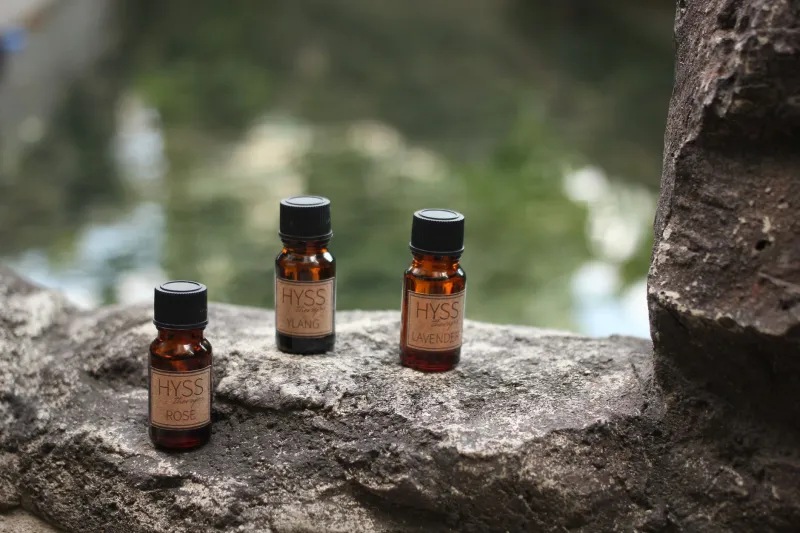
Lavender (Lavandula angustifolia): Its primary active compounds, linalool and linalyl acetate, have been shown to modulate GABA receptors — the same receptors targeted by benzodiazepine medications — producing sedative and anxiolytic effects without pharmacological dependency risks.
Bergamot: Rich in limonene and linalool, bergamot has demonstrated capacity to reduce corticosterone levels in animal models and has shown promise in human trials for reducing anxiety in clinical settings, including pre-surgical environments.
Hinoki cypress (Chamaecyparis obtusa): This is where Tokyo's approach introduces something genuinely distinctive. Hinoki, a conifer native to Japan and central to the practice of Shinrin-yoku (forest bathing), emits phytoncides — natural airborne compounds — that have been linked in Japanese research to reduced natural killer cell activity suppression, meaning they help restore immune function compromised by chronic stress. The scent of hinoki is not merely pleasant; it is physiologically communicative.
Yuzu: A citrus fruit used extensively in Japanese aromatherapy, yuzu has been studied for its effects on the autonomic nervous system. Research from Mie University in Japan found that yuzu inhalation significantly reduced heart rate and suppressed sympathetic nervous activity — measurable indicators of parasympathetic activation.
The Role of Touch: Why Massage Amplifies Every Olfactory Effect
Aromatherapy in isolation — simply diffusing oils in a room — produces documented effects. But when combined with skilled massage therapy, the mechanisms compound in ways that neither intervention achieves independently.
Massage stimulates the vagus nerve, the longest cranial nerve in the body and the primary conduit of the parasympathetic nervous system. Vagal stimulation slows heart rate, lowers blood pressure, reduces cortisol secretion, and activates the body's rest-and-digest mode. It also triggers the release of oxytocin, the neurochemical associated with safety and social bonding, which actively counteracts the amygdala's threat-detection activity.
Simultaneously, the dermal absorption of essential oil compounds — particularly when applied in a carrier oil through sustained massage — introduces active botanical compounds into the bloodstream. Linalool, for instance, has been detected in plasma samples following topical lavender application, confirming that transdermal absorption is not theoretical but measurable.
The combination of vagal stimulation, olfactory limbic activation, and transdermal absorption creates a three-pathway intervention that systematically dismantles the physiological architecture of chronic stress.
Why Tokyo's Approach Produces a Different Caliber of Result
Tokyo's wellness culture operates from a foundational philosophy that Americans rarely encounter in domestic spa settings. Japanese practitioners approach the body with a precision that is less about relaxation as an end goal and more about restoration as a clinical outcome. The concept of teinei — meticulous, attentive care — governs everything from the temperature of the treatment room to the sequencing of aromatic compounds used throughout a session.
At Diana Tokyo Aroma Massage, this philosophy shapes every treatment. Japanese practitioners bring an understanding of botanical compounds rooted in centuries of traditional use, now refined through engagement with contemporary research. The essential oils employed — including native Japanese botanicals unavailable in most Western spa contexts — are selected not for their popular appeal but for their documented effects on the specific physiological systems that chronic stress compromises.
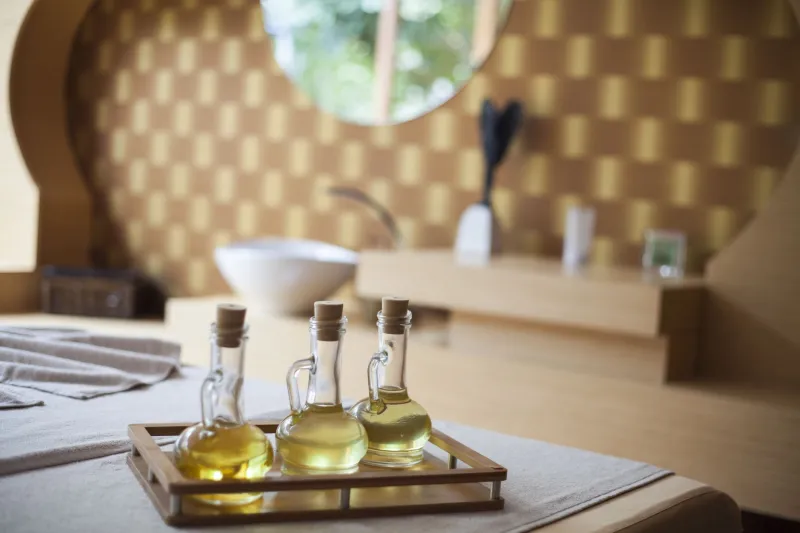
The environment itself is part of the intervention. Tokyo's spa culture prioritizes sensory coherence: the acoustics, the temperature, the quality of touch, and the aromatic environment are calibrated together to produce the conditions under which the parasympathetic nervous system can genuinely re-establish dominance.
A Rational Case for Booking the Treatment
For the skeptical American reader, here is the summary that matters: aromatherapy massage is not wellness theater. It is a multi-pathway physiological intervention with documented effects on cortisol levels, autonomic nervous system balance, vagal tone, and limbic system regulation. The mechanisms are understood. The effects are measurable. The evidence base is growing.
Chronic stress is not an inconvenience. It is a physiological state with real consequences for long-term health — cardiovascular, immunological, neurological. And the body's capacity to recover from it depends on creating conditions where the parasympathetic nervous system can operate without interruption.
That is precisely what a well-executed aromatherapy massage session provides. And in Tokyo, where precision, botanical knowledge, and a cultural commitment to genuine restoration converge, the conditions for that recovery are perhaps more reliably present than anywhere else on earth.