Why High-Achieving Americans Can't Truly Rest — and How a Tokyo Aromatherapy Retreat Finally Changes That
Why High-Achieving Americans Can't Truly Rest — and How a Tokyo Aromatherapy Retreat Finally Changes That
There is a particular kind of exhaustion that no beach chair can cure. It lives behind the eyes, in the shoulders that refuse to drop, in the thumb that instinctively reaches for a phone even when the notification hasn't sounded. American professionals know this exhaustion intimately — not because they lack access to vacations, but because the culture that produced their ambition follows them everywhere they go.
A week in Cancún. A long weekend in Napa. A cruise through the Caribbean. These are not failures of destination. They are failures of method. And until the method changes, the result will remain the same: a person who returns to the office on Monday slightly tanned, vaguely resentful, and no more restored than when they left.
Tokyo's approach to rest is categorically different. Not louder or more indulgent — quieter, in fact, and far more precise.
The Problem With the Average American Vacation
Consider what most American vacations actually demand of the people taking them. There are flights to book, restaurants to research, excursions to schedule, and photographs to take. There is the subtle but persistent pressure to maximize every hour, to extract value from every dollar spent on the trip. Even at a resort, the pool chair comes with a cocktail menu, a playlist, and a view engineered to be photographed rather than absorbed.
None of this is inherently wrong. But it is worth acknowledging that the architecture of the typical American vacation is built around stimulation, not restoration. The brain, which desperately needs genuine quiet, is instead handed a different set of inputs — warmer weather, louder music, brighter colors — and asked to interpret that substitution as rest.
It cannot. The nervous system is not fooled by geography alone.
What the burned-out professional actually requires is not a change of scenery. It is a structured, intentional dismantling of the mental posture they have held for months. That dismantling requires ritual. It requires sensory engagement that is specific rather than ambient. And it requires an environment that treats stillness as the destination, not the byproduct.
That is precisely what Tokyo's aromatherapy massage culture has refined over generations.
Why Tokyo Creates the Conditions for Genuine Disconnection
There is something psychologically significant about arriving in a city where you do not speak the language, where the signage is unfamiliar, where the social rhythms operate on frequencies you have never been trained to read. For a person accustomed to controlling every variable of their environment, Tokyo is gently, thoroughly disorienting — and that disorientation is, counterintuitively, one of the most powerful catalysts for true mental release.
The hypervigilant professional mind cannot maintain its grip when it is operating in genuinely unfamiliar territory. The spreadsheet obsession, the unread email anxiety, the perpetual performance of productivity — these patterns require a familiar context to sustain themselves. Remove that context entirely, and the grip begins to loosen.
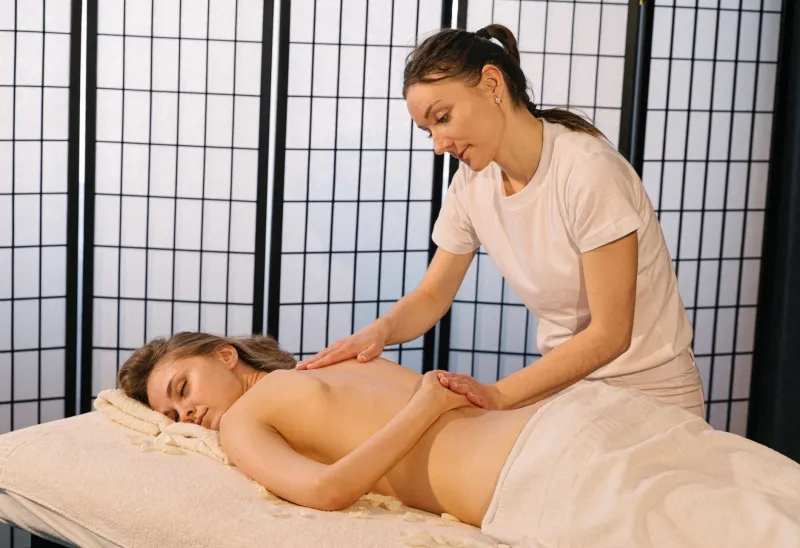
Tokyo's spa culture meets that loosened grip with extraordinary intentionality. An aromatherapy massage session at a Tokyo wellness establishment is not a passive experience. It is a ceremony. From the moment you enter — shoes removed, the ambient temperature shifting, the air carrying the clean, resinous presence of hinoki or the delicate brightness of yuzu — your senses are being deliberately guided away from the mental frequency of work and toward something older, quieter, and more elemental.
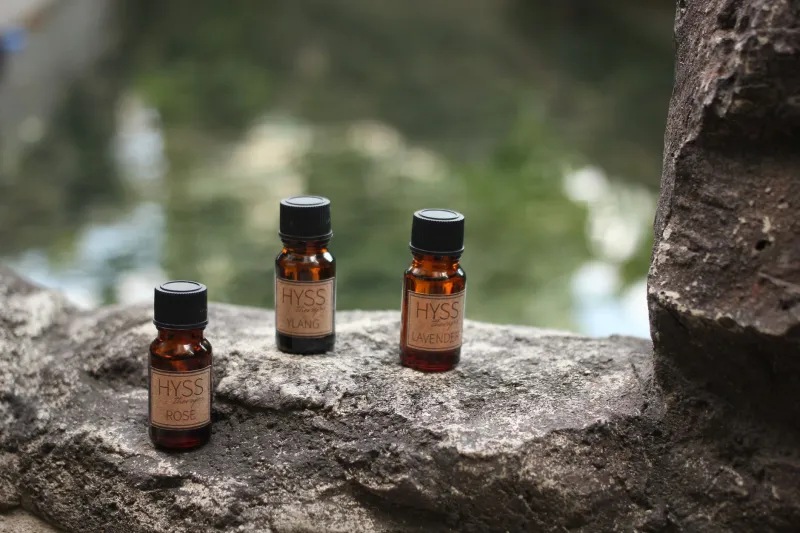
The therapeutic oils are not decorative. Each botanical compound interacts with the olfactory system in ways that directly influence the limbic brain — the region governing emotion, memory, and stress response. This is not aromatherapy as aesthetic flourish. This is the body being spoken to in a language it understands far more fluently than email.
Structuring a Tokyo Trip Around Decompression, Not Sightseeing
For the American professional accustomed to optimizing every hour of a trip, the idea of structuring a Tokyo visit around rest rather than attractions can feel almost transgressive. Resist that instinct. The temples and the ramen and the neon-lit streets of Shinjuku will still be there. What requires protection — and intentional scheduling — is the decompression itself.
Consider the following framework for a five-to-seven day Tokyo retreat built around genuine restoration:
Arrive and surrender the first day entirely. Do not plan anything beyond checking in and sleeping. Jet lag, when approached without resistance, is actually a useful ally — it forces the kind of physical stillness that the overworked professional rarely permits themselves.
Schedule your first aromatherapy session for the morning of day two. The body, still recalibrating from the flight, is in an unusually receptive state. A full-body aromatherapy massage at this stage does not merely relax the muscles — it begins to reset the nervous system's baseline, establishing a new physiological reference point for what calm actually feels like.
Build your days outward from your wellness appointments, not inward. Rather than treating a spa session as a reward after a day of sightseeing, treat it as the anchor around which everything else is loosely arranged. A quiet morning walk through a neighborhood garden, a session at the spa, a slow lunch, perhaps a brief visit to a single temple or market — this is a pace that allows genuine absorption rather than frantic accumulation.
Protect the silence. Tokyo, for all its density, offers pockets of extraordinary quiet — moss-covered gardens, the interior of a traditional tea house, the unhurried atmosphere of a wellness sanctuary. Seek these spaces deliberately. They are not empty of experience. They are full of a kind of experience that the overstimulated American nervous system has largely forgotten how to receive.
The Ritual as the Point
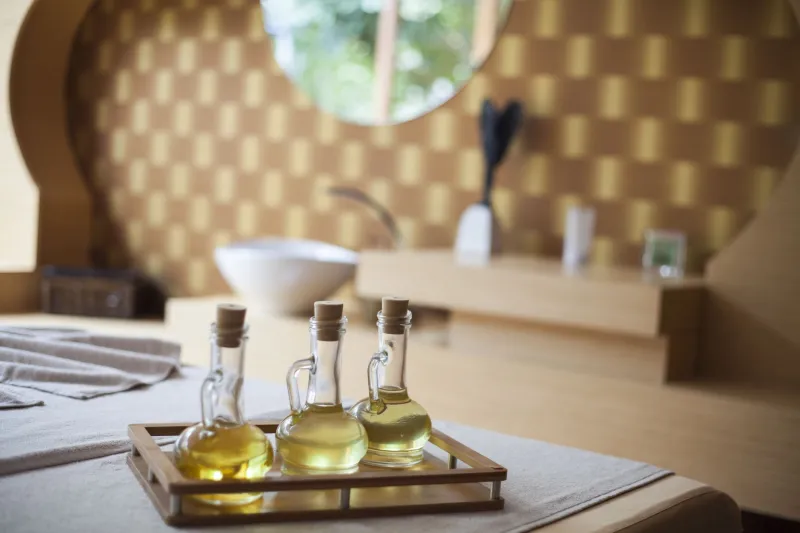
What distinguishes a Tokyo aromatherapy retreat from every other form of vacation is that the ritual itself is the destination. There is no summit to reach, no landmark to photograph, no checklist to complete. The value is located entirely in the quality of presence brought to each session, each quiet hour, each deliberate breath taken in a room that smells of warm sesame and wild botanicals.
For professionals who have spent years measuring their worth in output, this can feel disorienting at first. The instinct to justify the experience through productivity — I'm recharging so I can perform better — is understandable, and not entirely wrong. But the deeper gift of this kind of retreat is something that resists instrumentalization: the experience of being a body that exists without agenda, in a city that does not require anything of you, in the hands of practitioners who understand that the work of restoration is its own complete and sufficient purpose.
You will return to your inbox. The meetings will resume. But you will return having been somewhere your ambition could not follow — and that, for the chronic overachiever, may be the most radical thing you have ever permitted yourself.
At Diana Tokyo Aroma Massage, we have designed our treatments with precisely this guest in mind: the high-achiever who has never quite learned how to stop. We invite you to let us begin that education.